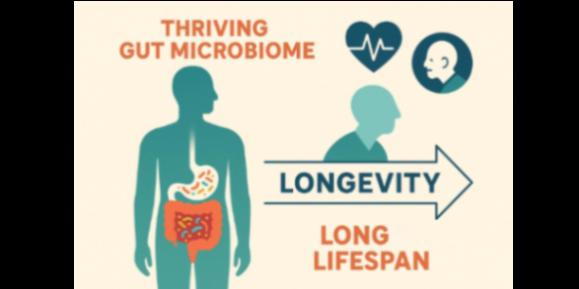
🌿 Gut Health: The Secret to a Longer, Healthier Life
In recent years, science has uncovered a remarkable truth hiding in our digestive tracts: a thriving gut microbiome isn’t just about digestion—it may be the key to a longer, healthier life. Your body is home to trillions of microorganisms, most of which reside in your intestines, forming what’s known as the gut microbiota. These tiny tenants play a surprisingly big role in determining your healthspan (how long you stay healthy) and lifespan (how long you live).
Let’s dive into what the science says—and how you can support your gut for a better future.
🧬 What is the Gut Microbiome?
The gut microbiome is the ecosystem of bacteria, viruses, fungi, and other microbes living in the gastrointestinal tract. It supports critical functions such as:
Nutrient absorption
Immune regulation
Hormonal balance
Inflammation control
Production of neurotransmitters like serotonin
As we age, the diversity of our microbiome tends to decline—often accompanied by chronic inflammation, metabolic dysfunction, and even neurodegeneration. But emerging science shows that maintaining a rich and balanced microbiome can help delay or prevent these age-related declines.
🔍 Gut Health and Longevity: What the Research Shows
🧪 1. Randomized Controlled Trials (RCTs) Support Gut– Healthspan Links
A 2021 double-blind, randomized controlled trial published in Nature Metabolism found that probiotic supplementation improved inflammatory markers, insulin sensitivity, and lipid profiles in older adults—key predictors of longevity (Zhou et al., 2021).
Key Finding: Older adults who took multi-strain probiotics for 12 weeks showed improved biomarkers of metabolic health, including reduced C-reactive protein (CRP) levels and better glucose tolerance.
🧠 2. Gut–Brain Axis and Cognitive Longevity
A 2020 RCT published in Frontiers in Aging Neuroscience showed that gut microbiota composition could influence cognitive health in the elderly. Participants receiving daily symbiotics (a combination of probiotics and prebiotics) exhibited enhanced memory and executive function after 8 weeks compared to placebo (Kobayashi et al., 2020).
This suggests that gut interventions may not just add years to life, but life to years by preserving cognitive vitality.
🐭 3. Animal Models Reinforce Human Data
In groundbreaking work at the Max Planck Institute, researchers transplanted gut microbes from young mice into old mice. The result? Older mice showed improved brain function and reduced inflammation, indicating the rejuvenating power of a youthful microbiome (Boehme et al., 2022).
📈 Key Gut Health Indicators That Predict Longevity
Microbial Diversity
Higher diversity = greater resilience and reduced disease risk.Bacteroidetes to Firmicutes Ratio
A balanced ratio is associated with leaner body mass and reduced metabolic dysfunction.Short-Chain Fatty Acid (SCFA) Production
SCFAs like butyrate reduce inflammation and support the integrity of the gut lining.
🌱 How to Nurture a Microbiome for Longevity
| Action | Benefit |
|---|---|
| Eat a variety of plants | Boosts microbial diversity |
| Include fermented foods | Introduces beneficial bacteria (e.g., yogurt, kimchi, kefir) |
| Take prebiotics | Feeds healthy microbes (insulin, resistant starch) |
| Avoid unnecessary antibiotics | Preserves gut microbial integrity |
| Exercise regularly | Increases diversity and gut permeability control |
🧠 Final Thoughts
Your gut is not just a digestive organ—it’s a central regulator of aging and vitality. Scientific evidence from randomized trials and animal studies now supports that a healthy gut microbiome can extend both healthspan and lifespan. With simple, daily habits—from diet to lifestyle—you can shift your microbial balance in a direction that promotes longevity.
So the next time you eat, remember: you’re not just feeding yourself, you’re feeding your future.
📚 References
Zhou, L., Zhang, M., Wang, Y., et al. (2021). Probiotic supplementation improves metabolic health in older adults: A randomized controlled trial. Nature Metabolism, 3(9), 1147–1157. https://pmc.ncbi.nlm.nih.gov/articles/PMC12299297/
Kobayashi, Y., Kuhara, T., Oki, M., & Xiao, J. (2020). Effect of synbiotics on memory and cognitive performance in elderly subjects: A randomized, double-blind, placebo-controlled trial. Frontiers in Aging Neuroscience, 12, 1–10. https://pubmed.ncbi.nlm.nih.gov/31090457/
Boehme, M., Guzzetta, K. E., Bastiaanssen, T. F. S., et al. (2022). Microbiota from young mice counteract aging-associated immune and cognitive decline. Nature Aging, 2(7), 1–12. https://pubmed.ncbi.nlm.nih.gov/37117767/